Why Mulch Matters in Kansas City's Climate
Kansas City summers are hard on landscape beds. July and August routinely hit 90°F+ with high humidity, and that heat does real damage to plant roots without adequate soil insulation. Mulch is the answer — but only if it's the right type, at the right depth, applied at the right time.
We mulch hundreds of Kansas City metro properties every spring and fall. Here's what we've learned.
The Best Mulch Types for Kansas City Landscape
Beds
Hardwood Bark Mulch (Our Standard Recommendation)
Shredded hardwood mulch is our default recommendation for most Kansas City residential landscape beds. It breaks down slowly, stays in place reasonably well during the hard KC thunderstorms of April and May, and as it decomposes it adds organic matter to the clay-heavy soil underneath. Over 3–4 years of annual mulch applications, we see real improvement in soil structure in the beds.
What to look for: medium-grind shredded hardwood, aged 1–2 seasons before application. Fresh-dyed mulch can tie up nitrogen as it decomposes — it's fine, but aged mulch is slightly better for plants.
Cedar Mulch
Cedar is naturally insect-resistant and has a pleasant aroma. It's a good choice for beds adjacent to structures or in areas with termite or grub concerns. It's also slower to break down than hardwood, so it can last 18–24 months before a topdress is needed. The trade-off is that it doesn't add as much organic matter to the soil as it decomposes.
Pine Straw
Less common in Kansas City than in Southern markets, but effective in beds with acid-loving plants (blueberries, azaleas, some ornamental grasses). Doesn't stay in place as well in heavy rain but is light and easy to work into tightly planted beds.
Rubber Mulch
We don't recommend rubber mulch for landscape beds in Kansas City. It doesn't decompose (which means no organic matter benefit), gets extremely hot in summer sun, and is difficult to remove once plants need replanting or dividing. The low-maintenance appeal wears off quickly.
Dyed Mulch (Red, Black, Brown)
The color fades within a season. The underlying material is usually shredded wood that's acceptable but not notably better than natural hardwood mulch. If you like the look, go for it — just understand you're paying a premium for something that won't last the summer.
The Right Depth: 2–3 Inches, No More
The most common mulching mistake we fix is mulch piled too deep — sometimes 4–6 inches — against plant stems and tree bases. This is called "volcano mulching" and it causes real damage: it holds moisture against the bark, encourages fungal disease, and can eventually girdle the plant by holding so much heat and moisture against the crown.
The right depth for Kansas City landscape beds:
- Minimum effective depth: 2 inches (enough to suppress weeds and retain moisture)
- Ideal depth: 2.5–3 inches
- Maximum: 3 inches (in beds with established plants and trees)
Critical rule: Keep mulch 2–3 inches away from plant stems and tree trunks. Pulled back mulch around a trunk base is what a correctly mulched tree looks like.
When to Mulch in Kansas
City
Spring Mulching (Preferred)
May is the best month for the primary annual mulch application in Kansas City. By May:
- The ground has thawed and dried out from spring rains
- Annual weed seeds haven't fully germinated yet (mulch suppresses them)
- Soil temperatures are warming but plant roots aren't yet stressed by summer heat
- Spring cleanup is done and beds are edged and ready
Timing the mulch application with or just after spring cleanup is the most efficient approach — cleanup removes the old matted debris, edging redefines the bed boundaries, and then fresh mulch goes down.
Fall Mulching
Some customers do a fall topdress in October to refresh the color and restore depth after the summer heat. Fall mulching also provides winter root insulation for perennials and helps prevent the frost heave that can push shallow-rooted plants out of the ground in Kansas City's freeze-thaw winters.
Fall mulching is a topdress — you're typically adding 1 inch over existing mulch, not a full 3-inch application.
Edging: The Step Most DIYers Skip
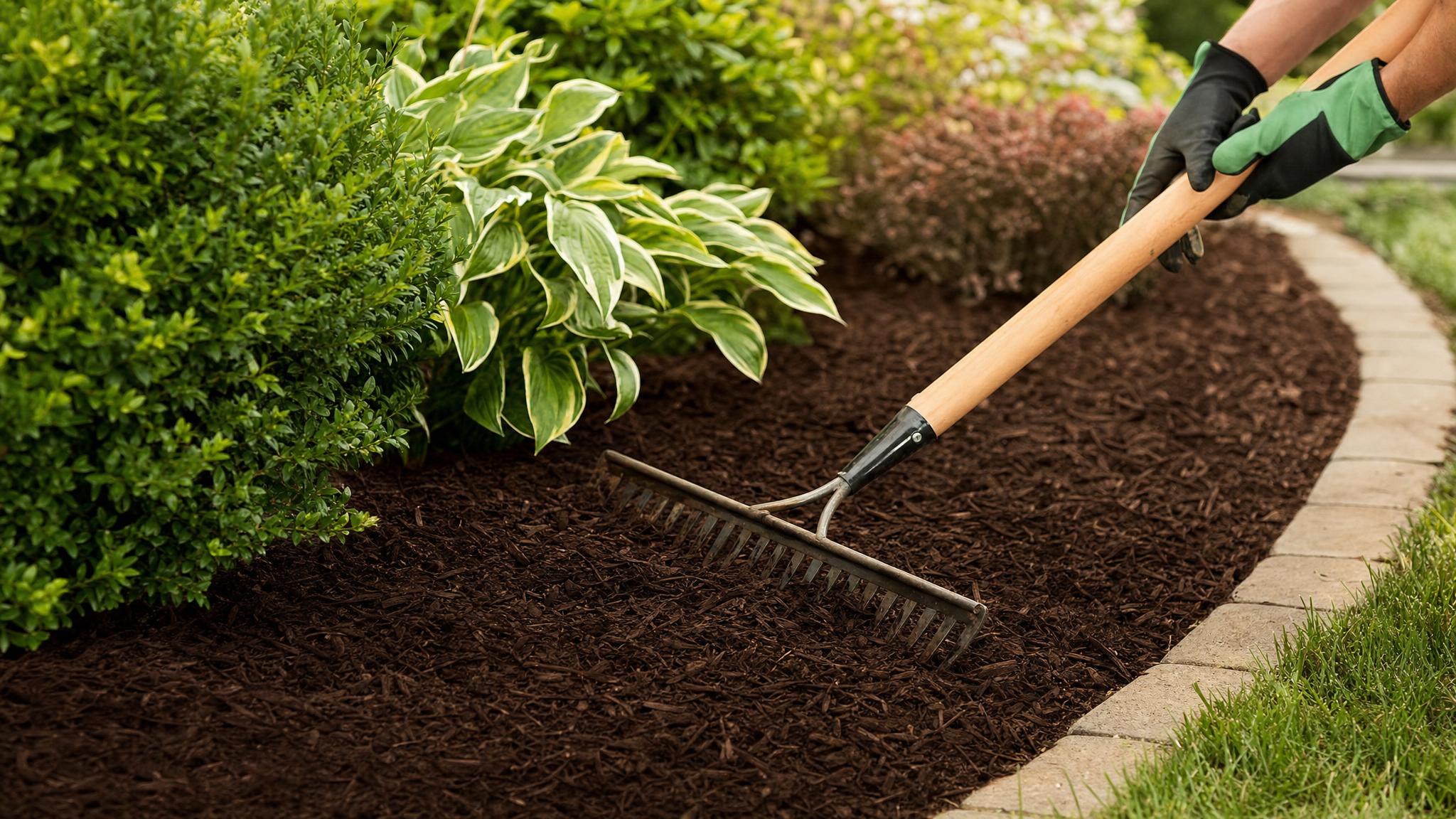
Mulch without edging is like painting without tape. The mulch looks better and stays put longer when the bed boundary is clean and defined. We always edge beds before mulching — either with a stick edger on established beds or a bed edger on new installations.
What good edging looks like: a clean 2–3 inch drop from the bed surface to the lawn, with a vertical cut edge. Grass encroachment over winter is sliced back and removed before mulch goes down.
If you're having us do the mulching, edging is included. If you're DIYing, edge first and let us know if you want us to just mulch.
How Much Mulch Do I Need?
For a 2.5-inch application depth:
- 100 square feet of bed area needs approximately 2.1 cubic feet of mulch
- 1 cubic yard covers approximately 108 square feet at 3 inches deep
For most Kansas City homes with 400–800 square feet of landscape bed area, you're looking at 3–7 cubic yards of mulch.
We haul and deliver in bulk — we don't charge per bag. The quote includes mulch material, delivery, installation, and cleanup.
What a Professional Mulch Install Includes
When we mulch a Kansas City property, here's what's included in the quote:
- Bed edging (redefining and cleaning up the lawn-to-bed boundary)
- Removing and bagging any debris from the bed surface
- Mulch delivery and installation at correct depth (2.5–3 inches)
- Clearing mulch away from stems, trunks, and plant crowns
- Cleanup of any mulch that lands on lawn or hardscape
The quote you get is the price you pay — no per-yard upcharges, no debris-removal fees. Just the number we quoted.
Mulch Pricing for Kansas City Metro Homeowners
Mulch installation in Kansas City typically runs $350–$900 for an average residential property, depending on bed square footage, existing mulch depth, and amount of edging needed. Properties with extensive planting beds or significant edging run higher.
Request a free estimate and we'll give you a flat quote based on your specific property. We're out to most KC metro locations within a few business days for an estimate.