
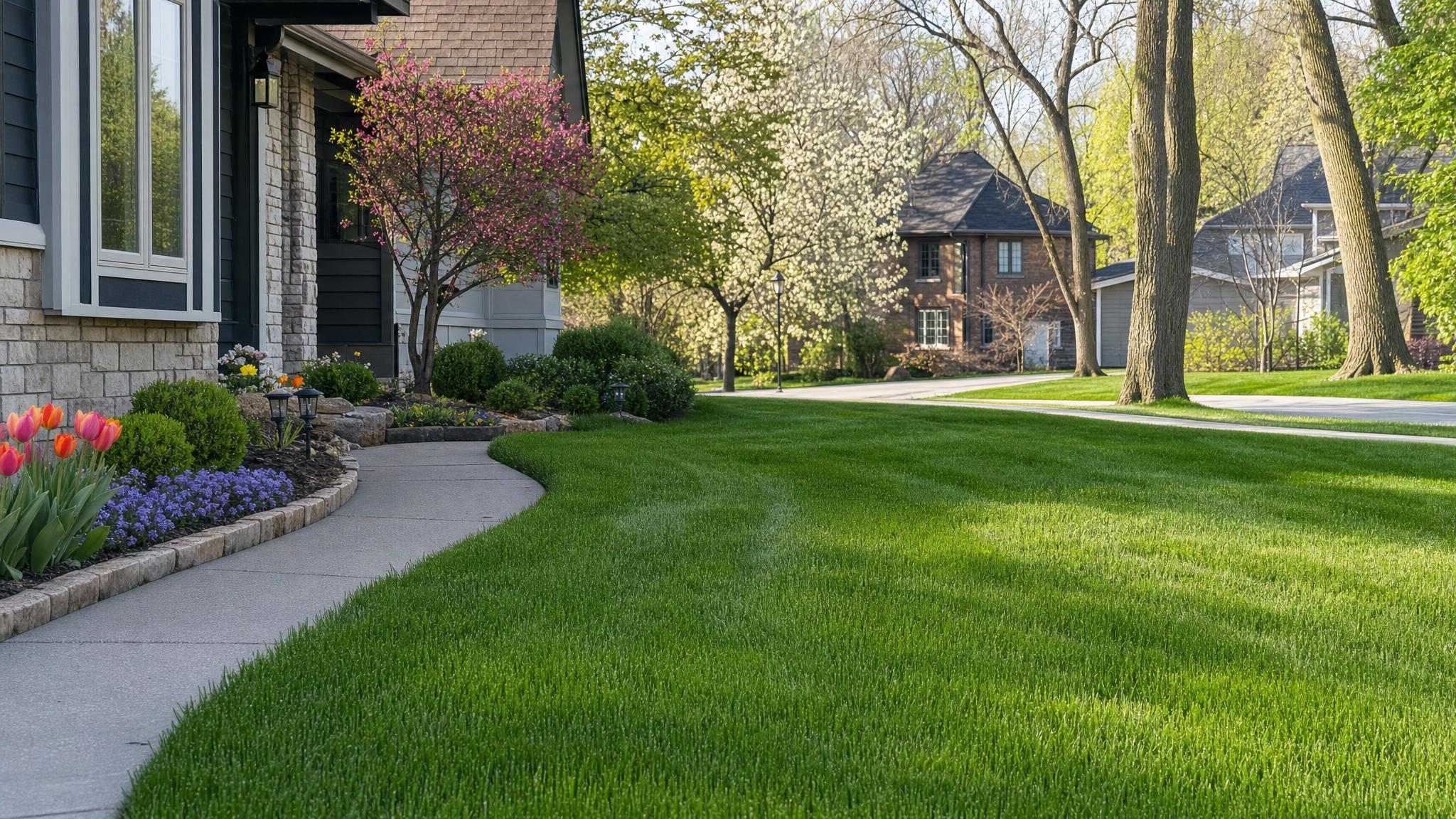
Spring Lawn Care in Kansas City: Why Timing Is Everything
Kansas City's spring is unpredictable. Late freezes can happen through mid-April. Soil moisture swings from saturated to dry in two weeks. Pre-emergent weed control has a specific soil temperature window that comes and goes — and if you miss it, you'll spend the summer fighting crabgrass.
Getting your lawn off to a good start in the KC metro isn't complicated, but the timing matters. Here's how we think about it month by month.
March: Cleanup and Assessment
Late March is the right time to start walking your lawn once the frost risk has dropped below nightly freeze territory — typically after March 15 in most KC metro years.
What to do in March:
- Rake out dead matted grass from areas that held snow or got compacted over winter. This is especially important in Kansas City's clay soil where drainage is slower — matted wet grass invites fungal disease if it sits.
- Cut back ornamental grasses to 4–6 inches before new growth emerges. Do this before you can see green at the base — once growth starts, cutting risks damaging new shoots.
- Inspect edges and beds for winter encroachment. Grass creeps into mulched beds over winter and the edges need resetting in spring.
- Check your mower: sharpen the blade, change the oil, and test the start before you need it.
What NOT to do in March:
- Don't fertilize yet — soil temperature needs to be consistently above 50°F for fertilizer uptake
- Don't mow yet (unless the lawn grew during a warm spell and is clearly over 4.5 inches)
- Don't put down pre-emergent yet unless the 10-day forecast shows consistent soil temps at 55°F
April: Pre-Emergent and First Fertilizer Application
Early to mid-April is the most critical timing window of the spring lawn season in Kansas City.
Pre-Emergent Weed Control
Crabgrass germinates when soil temperature at 2-inch depth reaches 55°F consistently — in Kansas City, that's typically between April 10 and April 25, though it shifts with the year. Pre-emergent needs to be down and activated (watered in) before germination.
The window is narrow. Too early and it breaks down before crabgrass germinates. Too late and you've missed it entirely.
We track soil temperatures using the KSU Extension monitoring stations and Mesonet data for the KC metro. Our general rule: apply when the 10-day forecast shows consistent 50°F+ overnight lows and no major rain events to wash it out immediately.
For homeowners doing this themselves, the forsythia bloom is a traditional Kansas City indicator — apply pre-emergent when forsythias are in full bloom.
First Fertilizer Application
Pair the pre-emergent with a light fertilizer application in April — or use a combination product (pre-emergent plus fertilizer). For cool-season lawns in Kansas City, we use a slow-release nitrogen formula at this application to support the spring green-up without pushing excessive blade growth.
April Checklist:
- Apply pre-emergent at the right soil temperature window
- Light fertilizer application (slow-release nitrogen)
- First mow when grass reaches 3.5–4 inches (do not cut more than 1/3 of the blade height)
- Re-edge landscape beds where winter moved things around
May: Active Growth Management
May is the most active month for cool-season grass in Kansas City. Temperatures are in the ideal 60–75°F range, soil moisture is typically adequate, and fescue is growing fast.
May Checklist:
- Mow regularly: Every 5–7 days in most Kansas City yards during peak May growth. Set the mower at 3.5–4 inches — the ideal height for tall fescue in KC
- Don't over-fertilize: If you applied in April, you likely don't need another fertilizer application in May. Over-fertilizing in spring drives excessive blade growth at the expense of root development
- Watch for fungal issues: KC springs are wet, and cool-season grass under wet conditions can develop dollar spot and brown patch. Good airflow and not over-watering help. If you see circular brown patches, call us.
- Overseed bare spots now (if you missed fall): May is the last viable window for spring overseeding. Results won't be as good as fall seeding, but it's better than nothing
- Schedule mulch: May is the best month to have mulch installed in landscape beds before summer heat sets in
Common Spring Mistakes on Kansas City
Lawns
Mistake 1: Scalping the first mow
The first mow of the year is not the time to cut short. Set the deck high (3.5–4 inches) and resist the temptation to take it down because the lawn "looks shaggy." Scalping weakens root systems entering the summer stress period.
Mistake 2: Watering too much in spring
Kansas City gets adequate spring rainfall most years. Supplemental irrigation before the lawn actually needs it encourages shallow root development — and shallow roots are what make lawns struggle in July's heat.
Mistake 3: Missing the pre-emergent window
We see this every year. Homeowners plan to "get to it this weekend" and the soil temperature hits 55°F while they're waiting. If you're not tracking soil temps, hire someone who is or use a calendar date that's roughly April 15 as your trigger.
Mistake 4: Applying too much nitrogen too fast
Spring lawn fertilizer is tempting to overdo because the results are immediately visible. But excessive nitrogen in April and May pushes blade growth so fast that roots can't keep up. Enter the summer heat with shallow roots and you'll watch your lawn brown out in August despite watering.
When to Call for a Spring Cleanup vs. DIY
Spring cleanup — the raking, debris removal, cutting back ornamental grasses, and bed re-edging — is manageable as DIY on smaller lots. On properties over 5,000 square feet of turf, or properties with significant perennial beds and ornamental grasses, it becomes a half-day or full-day project.
Our spring cleanup service handles the full property reset: debris removal, ornamental grass cutback, bed edging, and a first mow at the correct height. We schedule these in March and April and combine them with mulch installation when the customer wants both done at the same time.
Spring Lawn Care Timeline
Summary
| Timing | Task |
|---|---|
| Late March | Spring cleanup: debris, ornamental grasses, bed inspection |
| April 10–25 | Pre-emergent application (soil temp 50–55°F) |
| April (with pre-emergent) | First fertilizer — light, slow-release nitrogen |
| When grass reaches 3.5" | First mow at 3.5–4" deck height |
| May | Regular mowing every 5–7 days; mulch installation |
| End of May | Assess lawn density; spot overseed if needed |
Get ahead of the season. Request a free spring estimate and we'll let you know what your lawn needs this year.